If you’ve ever found yourself in the middle of a grocery store aisle in Texas or a quiet park in North Carolina, staring at your child while they have a full-blown meltdown, you’ve probably had one thought: “I just need this to stop.”
Believe me, we get it. As parents and caregivers, our first instinct is often to put out the fire. We want the screaming to stop, the hitting to end, or the elopement to cease, mostly because we want our kids to be safe and successful, and partly because we’re just plain exhausted.
But here’s the thing: at Pillars Behavioral Health, we believe that every child is a unique masterpiece, intentionally created by God with a specific purpose and a voice that deserves to be heard. When we only focus on "stopping" a behavior, we’re often just putting a lid on a boiling pot. If we don’t turn down the heat and give that steam somewhere to go, it’s going to find another way out.
Today, let’s dive into the world of positive behavior support and talk about the difference between reinforcement and punishment, and why teaching a replacement behavior is the secret sauce to long-term growth.
The "Stop" vs. the "Start": Reinforcement vs. Punishment
In the world of applied behavior analysis for children, we talk a lot about "consequences." Now, don't let that word scare you! In ABA, a consequence is simply what happens after a behavior.
There are two main types of consequences:
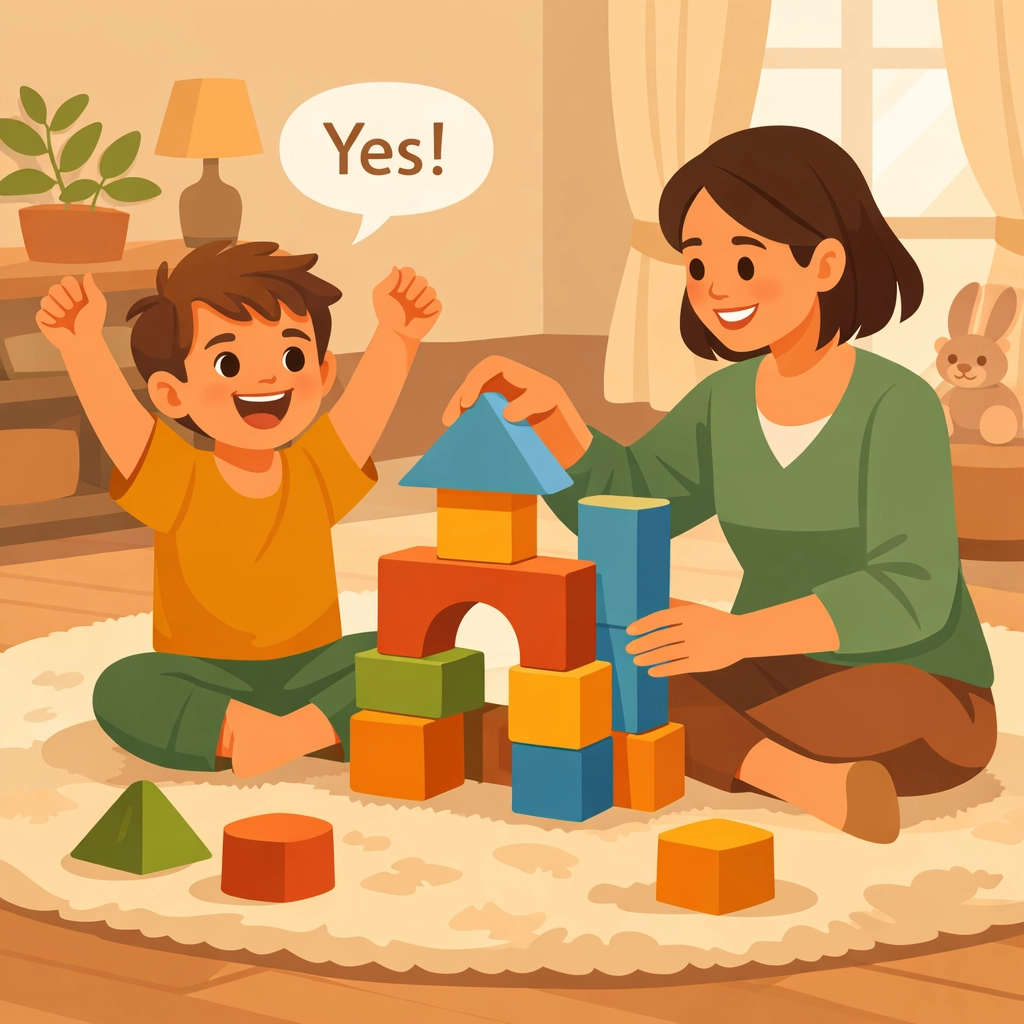
- Reinforcement: This is the "Yes!" energy. It’s a consequence that makes a behavior more likely to happen again in the future. If your child asks for a snack politely and you give them a cracker, you’ve reinforced polite asking.
- Punishment: This is the "Stop" energy. It’s a consequence that makes a behavior less likely to happen again.
Now, here is the honest truth: punishment can work in the short term. If a child is doing something dangerous and there’s a firm "No" or a loss of a privilege, the behavior might stop right then and there. But, and this is a big "but", punishment only tells a child what not to do. It doesn't tell them what they should do instead.
The "Whack-a-Mole" Effect (And Why It Happens)
Imagine you’re playing a game of Whack-a-Mole. A mole pops up (let’s call this behavior "Screaming for a Cookie"), and you whack it down with a punishment. Great! The screaming stopped. But wait… five minutes later, another mole pops up in a different hole. Now, your child is "Kicking the Cabinet for a Cookie."
Why did this happen? Because the need for the cookie never went away!
When we use punishment without teaching a replacement skill, we leave a void. That child still has a God-given need to communicate, to seek comfort, or to get their needs met. If we take away their only "tool" (the "bad" behavior) without giving them a better one, they’re going to scramble to find a new tool, and usually, that new tool isn't any better than the first one.
This is why we focus so heavily on compassionate behavior therapy. We aren't here to "fix" your child, because they aren't broken. We’re here to help them trade in their "clunky, broken tools" for "shiny, effective ones."
Why Replacement Behaviors are the Real Winners
At Pillars Behavioral Health, we prioritize play-based ABA therapy. Why? Because when a child is engaged and having fun, they are in the best headspace to learn new skills.
Teaching a replacement behavior means looking at the "why" behind the action. In clinical terms, we call this the "function" of the behavior.
- Is your child hitting because they want your attention? (God made us for connection!)
- Are they throwing a toy because they’re frustrated with a task? (God gave us the ability to learn and grow through challenges!)
- Are they running away because they need a break? (Even the Creator rested on the seventh day!)
Once we know the why, we can teach the how. Instead of hitting, we teach them to tap your shoulder. Instead of throwing, we teach them to say "Help please." Instead of running, we teach them to ask for a "Break."

The Pillars Way: Mobile, Faith-Based, and Fun
We know that life doesn't happen in a sterile environment. That’s why we ditched the traditional office model. We provide in-home ABA therapy and in-school ABA therapy across Texas and North Carolina.
By working in the environments where your child actually lives and plays, we can catch those "teaching moments" in real-time. Whether it's in your living room in Dallas or on a playground in Raleigh, our team is there to model positive reinforcement and help your child find their voice.
We also believe that growth doesn't stop at childhood. Our programs for ABA therapy for young adults focus on the same core principles: replacing challenging behaviors with functional, independent skills that help them navigate the world with confidence and dignity.
How to Start Focusing on "The Start" at Home
If you’re feeling overwhelmed, take a deep breath. You are doing a great job, and you were chosen to be your child’s parent for a reason. Here are a few quick tips to shift from "stopping" to "teaching":
- Observe the Pattern: Before you react, ask yourself, "What is my child trying to tell me right now?" (Check out our post on how behavior is communication for more on this!).
- Catch Them Being Good: This is the heart of positive behavior support. When your child is playing quietly or uses a small word, shower them with praise! Reinforce the things you want to see more of.
- Prompt the Better Way: If you see your child starting to get frustrated, jump in before the behavior happens. "Hey, do you need help? Say 'Help please'!"
- Practice When They Are Calm: Don't try to teach a new skill in the middle of a meltdown. Practice "asking for a break" when they are happy and relaxed. It makes it much easier for them to remember when they’re actually stressed.

You Don’t Have to Do This Alone
Navigating the world of autism therapy in Texas or searching for autism therapy in North Carolina can feel like a lot. But at Pillars Behavioral Health, we’re more than just therapists: we’re your partners.
Our goal is to create a ripple effect of quality, learning, and passion that transforms your family’s daily life. We want to see your child thrive, not just "comply." We want to see them use their unique talents and personality to interact with the world in a way that brings them joy.
If you’re tired of the "Whack-a-Mole" game and you’re ready to focus on growth through compassionate, play-based ABA, we would love to chat. Whether you're interested in in-home ABA therapy or need support in the school setting, we are here to walk this journey with you.
Every behavior is just a request for a skill they haven't learned yet. Let’s teach them together.
Ready to see the difference that compassionate, replacement-focused ABA can make? Reach out to us today and let’s start building those pillars of success for your child!
Leave a Reply