
If you're weighing your options between in-home and in-school ABA therapy, you're likely feeling the weight of making the "right" choice for your child. It's completely natural to wonder which setting will give your little one the best shot at mastering those everyday skills that make such a big difference in their independence and confidence.
The truth is, when it comes to daily living skills specifically, the research points pretty clearly in one direction: but that doesn't mean the decision is simple. Every child is unique, every family situation is different, and what works beautifully for one family might not be the perfect fit for yours.
Let's walk through this together, looking at what the evidence tells us while keeping your family's real-world needs front and center.
What Daily Living Skills Are We Actually Talking About?
Before we dive into the comparison, let's get specific about what we mean by "daily living skills." These are the practical, everyday activities that help your child navigate their world with greater independence:
- Personal care routines like brushing teeth, bathing, and getting dressed
- Mealtime skills including using utensils, trying new foods, and appropriate table manners
- Household participation such as putting away toys, helping with simple chores, or following bedtime routines
- Communication during daily activities like asking for help or expressing preferences
- Safety awareness around the home and community
- Organization skills like managing personal belongings or following visual schedules
These skills might seem basic, but they're the building blocks of independence. When your child masters them, it opens up so much more freedom for your whole family.

The Case for In-Home ABA Therapy
Here's where the research gets really interesting. Study after study shows that in-home therapy has a significant advantage when it comes to daily living skills: and it makes perfect sense when you think about it.
Learning Where It Matters Most
Imagine trying to teach your child to make their bed while you're sitting in a classroom with a toy bed that doesn't look anything like the one at home. It might work to some degree, but there's something powerful about learning a skill in the exact place where you'll actually use it.
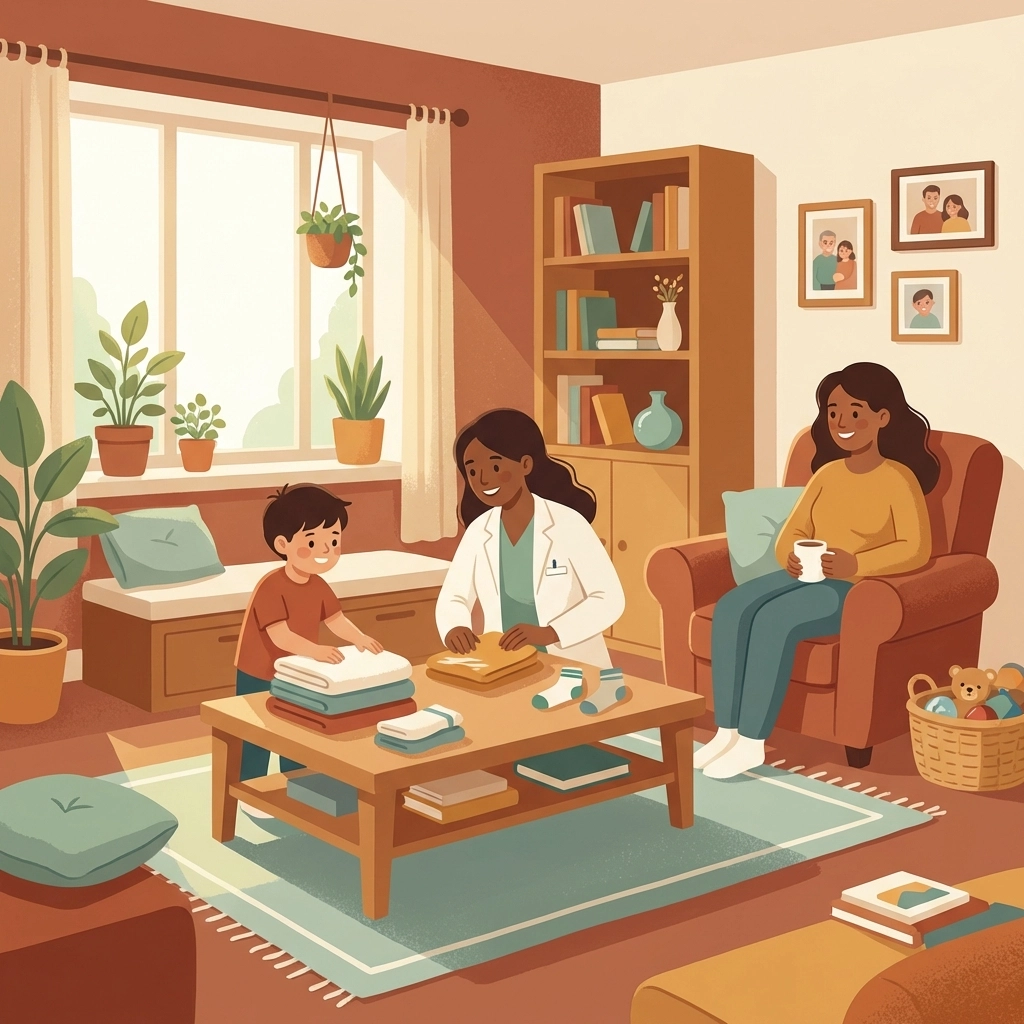
In-home therapy lets your child practice brushing their teeth with their own toothbrush, at their own sink, following the same routine they'll follow every morning and evening. They learn to put on their coat using the hooks by your front door, not a generic coat rack in a therapy center.
This isn't just convenient: it's based on solid learning principles. When children learn skills in their natural environment, they don't have to work as hard to "generalize" or transfer what they've learned to different settings. The skill is already being learned in the setting where it matters most.
Your Whole Family Becomes Part of the Team
One of the biggest advantages of in-home therapy is how naturally it brings parents and siblings into the learning process. You're not just hearing about what happened in therapy: you're watching it unfold, seeing exactly how the therapist approaches challenges, and learning techniques you can use throughout the week.
This kind of maximum parental involvement isn't just nice to have; research shows it significantly improves outcomes. When you can reinforce what your child is learning during those everyday moments between therapy sessions, the progress tends to stick better and happen faster.
Customized to Your Real Life
Every home is different. Your kitchen setup, your bathroom layout, your family's morning routine: these details matter when you're teaching practical life skills. In-home therapists can work with your child's actual environment, addressing the specific challenges your family faces.
Maybe your child struggles with the particular way your shower turns on, or they have trouble navigating the narrow hallway to their bedroom. These aren't abstract problems to solve someday: they're daily realities that in-home therapy can address directly.
The Benefits of In-School ABA Therapy
Now, before you think I'm completely dismissing school-based therapy, let me share why it has its own important strengths: especially when we zoom out beyond just daily living skills.
Social Learning Opportunities
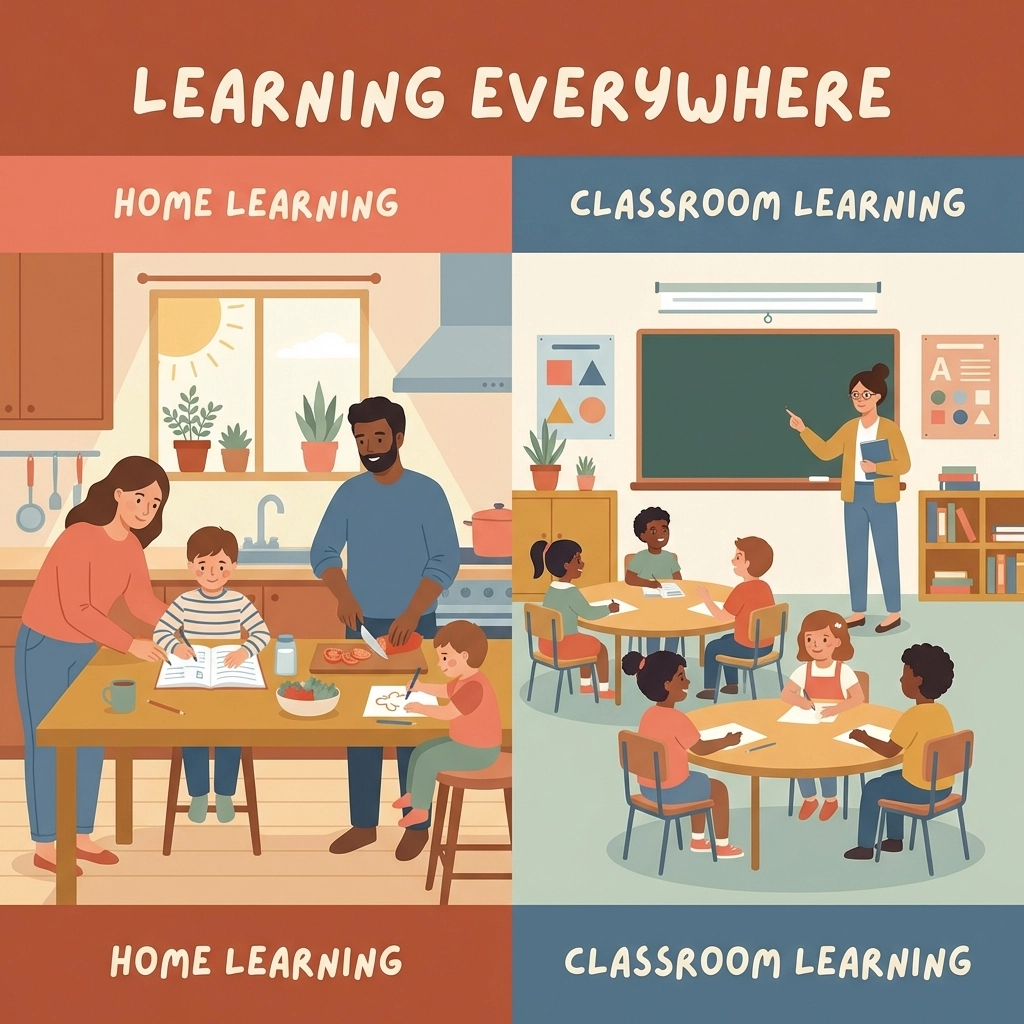
School settings naturally provide opportunities for peer interaction and social skill development that can be harder to replicate at home. Your child might learn to wait their turn, share materials, or communicate with classmates in ways that generalize to other group settings.
Structured Environment Benefits
Some children actually thrive in the more structured, predictable environment that school-based therapy can provide. The clear boundaries, consistent routines, and dedicated learning spaces work well for kids who might get overwhelmed or distracted in the busy environment of home.
Professional Resources and Equipment
Schools often have specialized equipment, sensory rooms, or other resources that might not be available in your home. For certain therapeutic goals, these tools can be genuinely helpful.
Preparation for Academic Settings
If your child will be spending time in classroom environments, school-based therapy can help them learn to function successfully in those specific settings.
Key Factors to Consider for Your Family
So how do you decide what's right for your situation? Here are the most important factors to weigh:
Your Child's Learning Style
Some children are highly distractible at home: maybe they're too focused on their toys or too comfortable in their own space to engage fully with therapy activities. For these kids, the novelty and structure of a school setting might actually support better learning.
Other children feel most secure and focused in familiar surroundings. If your child tends to be anxious in new environments or takes a long time to warm up to new people and places, home might be where they'll do their best learning.
Your Family's Schedule and Logistics
In-home therapy requires you to be present and available, which isn't always possible for every family's work schedule or other commitments. School-based therapy might align better with your existing routines.
On the flip side, if you're spending a lot of time driving to and from appointments, in-home therapy could actually free up valuable family time.
Your Specific Goals
If your primary concerns are around daily routines, household participation, and personal care skills, in-home therapy has a clear research-backed advantage. But if you're more focused on academic readiness, social skills, or specific behavioral challenges that show up in group settings, school-based therapy might be more relevant.
Sibling and Family Dynamics
In-home therapy naturally involves the whole family, which can be wonderful for generalization but challenging if you have multiple children with different needs or if family stress levels are high. Sometimes having therapy happen "somewhere else" can reduce pressure on the home environment.
The Power of a Combined Approach
Here's something that might surprise you: you don't necessarily have to choose just one. Many families find that a combination approach gives them the best of both worlds.
You might use in-home sessions to focus specifically on those daily living skills: morning routines, mealtime behavior, household participation: while incorporating some center-based or school-based sessions for social skill development and generalization to other environments.
This approach acknowledges what the research tells us (that home is optimal for daily living skills) while also preparing your child for success in the various environments where they'll need to function.
Making the Right Decision for Your Family
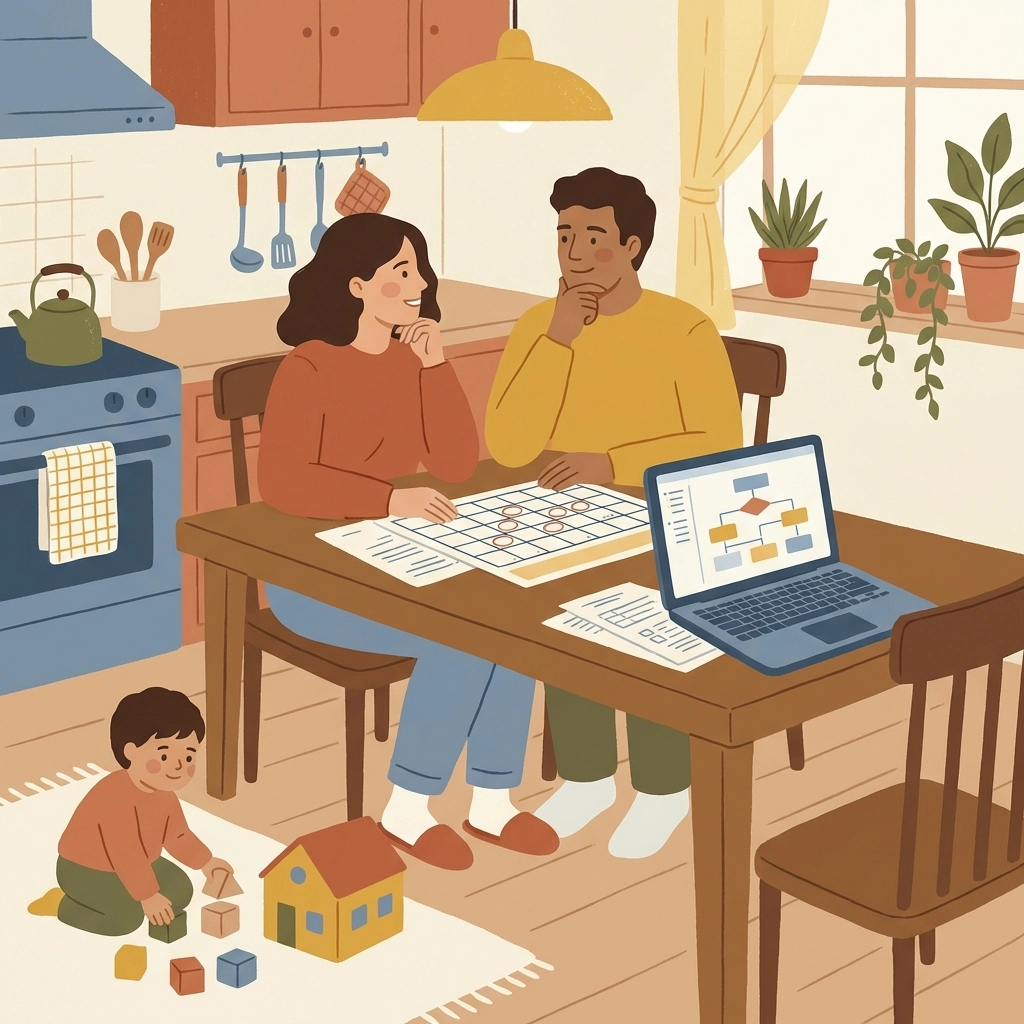
As you're thinking through these options, remember that the "best" choice is the one that works for your specific child and family situation. Here are some questions that might help guide your decision:
- Where does your child seem most comfortable and focused?
- What are your top priority goals right now?
- What does your family's schedule and support system look like?
- How important is it for siblings and other family members to be involved in the learning process?
- Are there specific environmental factors at home or school that might help or hinder your child's progress?
Don't hesitate to have honest conversations with potential therapy providers about your concerns and priorities. A good ABA team will help you think through these factors and might even suggest starting with one approach and adjusting based on how your child responds.
Moving Forward with Confidence
The research is clear that in-home therapy tends to be more effective for daily living skills, but that doesn't mean it's automatically the right choice for every family or every child. Your decision should be based on your unique situation, your child's individual needs, and your family's goals and resources.
What matters most is that you're being intentional about this choice and considering how different settings might support your child's growth and your family's wellbeing. Whether you choose in-home, school-based, or a combination approach, the fact that you're thinking carefully about these factors puts you on the right track.
If you're still feeling uncertain, consider starting with one approach and remaining open to adjusting as you learn more about what works best for your child. The goal isn't to make the perfect choice from the beginning: it's to create a learning environment where your child can thrive and your family can feel supported.
At Pillars Behavioral Health, we're here to help you navigate these decisions with confidence and support your family's journey toward greater independence and connection.
Leave a Reply