
If you're getting ready to start ABA therapy for your child, you might be wondering what the first few weeks will actually look like. Will someone show up with flashcards and demand your child sit at a table? Will there be worksheets? Will your child even want to participate?
Here's the good news: play-based ABA therapy looks completely different from what you might be picturing. At Pillars Behavioral Health, we believe learning happens best when kids are engaged, curious, and having fun. That's why we've built our approach around your child's natural interests, daily routines, and what matters most to your family, whether you're in Texas, North Carolina, or anywhere in between.
Let's walk through what you can actually expect during those crucial first 30 days.
What Makes Play-Based ABA Therapy Different?
Before we dive into the timeline, let's clear something up. Play-based ABA isn't about abandoning evidence-based practices, it's about delivering them in a way that feels natural and enjoyable for your child.
Instead of starting with demands and compliance-focused drills, we follow your child's lead. If they love dinosaurs, we're building communication skills around dinosaurs. If they light up when playing with blocks, we're using blocks to teach turn-taking, problem-solving, and social interaction. If they're drawn to sensory play, we're meeting them there.
This approach recognizes what research has shown us: children learn best when they're motivated, engaged, and emotionally regulated. When therapy feels like play, your child is more likely to participate, practice new skills, and actually generalize what they're learning to everyday situations.

Week 1: Building Trust and Getting to Know Your Family
The very first week isn't about teaching anything. It's about relationships.
Your therapist will spend this time getting to know your child as a unique individual, not just a list of behaviors or deficits. They'll observe what brings your child joy, what makes them feel safe, and what naturally captures their attention. This process is called "pairing," and it's the foundation for everything that comes next.
During pairing, your therapist becomes associated with fun, preferred activities, and positive experiences. They might:
- Join your child in whatever they're already doing without placing any demands
- Bring toys or activities that align with your child's interests
- Use playful interactions to build rapport
- Let your child take the lead completely
You'll also spend time talking with your therapist about your family's routines, priorities, and concerns. What does a typical day look like? What skills would make the biggest difference in your child's life right now? What are your hopes for therapy? This collaborative conversation shapes everything moving forward.
For families in Texas and North Carolina, this is also when we'll discuss logistics, session schedules, whether therapy will take place in your home or at school, and how we'll keep you informed about progress.
Weeks 2-3: The Assessment Phase (But Make It Fun)
Around the second and third weeks, we move into a more formal assessment phase. If you've heard the term "CPT code 97151," that's what we're talking about, a comprehensive ABA assessment that helps us understand your child's current skill levels across multiple areas.
But here's what this actually looks like in a play-based model: your therapist is still playing with your child. They're just observing more intentionally.

They might notice:
- How your child initiates interaction or requests help
- Whether they engage in pretend play or prefer more concrete activities
- How they respond to transitions between activities
- What communication strategies they're already using (gestures, sounds, words, AAC)
- How they navigate challenges or frustration
- What natural reinforcers motivate them most
This isn't about sitting your child down for standardized testing. It's about understanding how they naturally interact with their environment, people, and materials. Your therapist will also ask you lots of questions about what you're seeing at home, at school, and in the community.
During these weeks, you might see your therapist start to introduce very gentle, low-pressure opportunities for your child to practice emerging skills. But again, it's woven into play. If your child is building a tower and your therapist notices they're working on requesting, they might hold back a desired block and wait to see if your child initiates communication. It's subtle, naturalistic, and still fun.
Week 4: Setting Goals and Starting Structured Play Sessions
By week four, we're ready to set specific goals together. Your therapist will share what they've learned during the assessment and work with you to identify priorities that align with your family's values and your child's needs.
These goals might include:
- Expanding communication (requesting, commenting, asking questions)
- Building daily living skills (getting dressed, tooth brushing, mealtime routines)
- Increasing social interaction with siblings or peers
- Reducing challenging behaviors by teaching replacement skills
- Improving focus and flexibility during transitions
Now, therapy sessions become more intentional, but they still don't look rigid or clinical. Your therapist will design play-based activities that create natural opportunities to practice these target skills.
For example, if one goal is improving turn-taking, you might see activities like:
- Rolling a ball back and forth
- Taking turns adding pieces to a puzzle
- Playing simple board games with modified rules
- Building something together where each person adds one piece at a time
If another goal is expanding communication, your therapist might:
- Model language during play ("Oh! The car goes fast!")
- Create opportunities for your child to request preferred items or actions
- Use visual supports or AAC devices during play routines
- Celebrate any communication attempts, not just perfect speech

The key difference? Your child is still playing. They're still engaged. They're still having fun. But now, learning is happening with more focus and intention.
What This Approach Does for Communication and Daily Living Skills
One of the biggest questions families ask is: "Will this actually help my child with real-life skills?"
Absolutely. In fact, play-based ABA is uniquely suited for building functional communication and daily living skills because it happens in the context where your child will actually use them.
When we teach communication through play, we're not just teaching your child to label flashcards. We're teaching them to:
- Request what they need
- Share their thoughts and feelings
- Engage with others in meaningful ways
- Navigate social situations with confidence
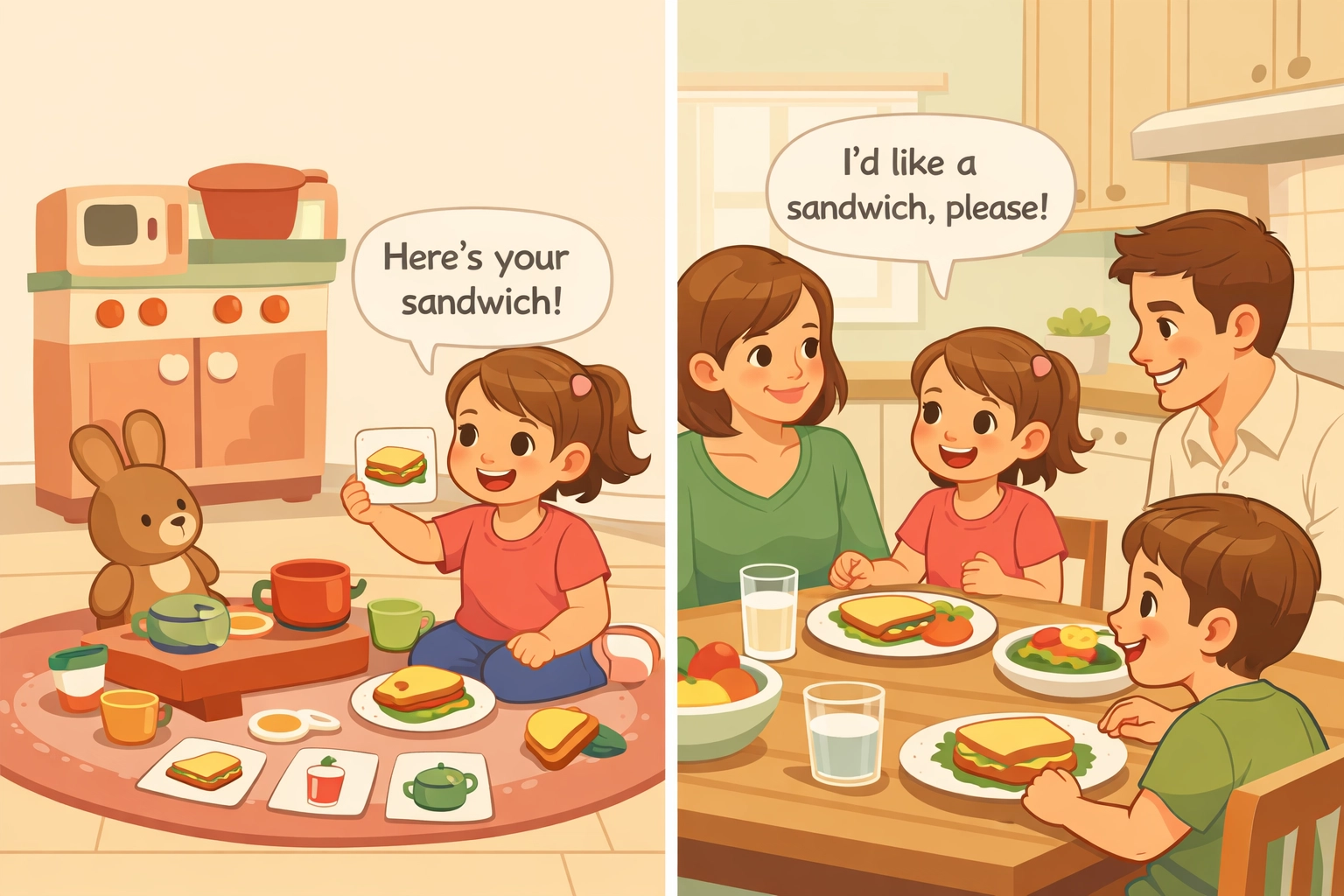
When we embed daily living skills into play routines, your child practices these skills in a low-pressure environment before transferring them to real situations. Pretend play with dolls can teach tooth brushing. Playing "restaurant" can build mealtime skills. Following multi-step games can strengthen the executive functioning needed for morning routines.
This naturalistic approach also means skills are more likely to generalize. Your child isn't learning to perform a skill only at a therapy table: they're learning it in a way that makes sense across different settings and situations.
What Families in Texas and North Carolina Should Know
If you're starting play-based ABA therapy with us in Texas or North Carolina, you can expect this same compassionate, child-led approach regardless of your location. We're committed to meeting families where you are, literally and philosophically.
We also know that navigating insurance, understanding your rights, and coordinating services can feel overwhelming. That's why our team will walk you through every step, from prior authorization to ongoing communication with your child's school or other providers.
You're not just signing up for therapy sessions. You're joining a partnership focused on your child's growth, your family's well-being, and your confidence as your child's most important advocate.
You're Not Alone in This Journey
Starting ABA therapy can bring up a lot of emotions: hope, anxiety, uncertainty, relief. All of those feelings are valid. The first 30 days are just the beginning of what we hope will be a collaborative, positive experience for your whole family.
You'll see your child light up during sessions. You'll notice small victories that feel monumental. You'll have questions, and we'll be here to answer them. You'll feel more confident in supporting your child's development at home.
And most importantly? Your child will be learning, growing, and thriving: all while doing what they do best: playing.
If you're considering play-based ABA therapy or want to learn more about what makes our approach different, we'd love to talk with you. Reach out to our team and let's start this journey together.
Because at Pillars Behavioral Health, we believe therapy should meet your child where they are, honor who they are, and celebrate every step forward: no matter how small it might seem.
Ready to get started? The first 30 days are just the beginning of something beautiful.
Leave a Reply