If you're a parent in Texas researching ABA therapy for your child, you've probably noticed there's a lot of information out there: and not all of it paints the same picture. Maybe you've read glowing success stories. Maybe you've stumbled across some criticism that gave you pause. And now you're wondering: Is in-home ABA therapy the right choice for my family?
First, take a breath. The fact that you're doing your homework shows how much you care about finding the right fit. And that's exactly what this should be about: finding what works for your child, in your home, with your family's unique needs in mind.
Here are seven things Texas families should know before starting in-home ABA therapy.
1. In-Home Therapy Means Learning Happens Where Life Happens
One of the biggest advantages of in-home ABA therapy is that your child learns skills in the exact environment where they'll use them. There's no disconnect between "therapy time" and "real life."
Think about it: when your child practices mealtime skills, they're sitting at your actual dining table. When they work on getting dressed independently, they're using their own dresser, their own clothes, their own bathroom. Toileting, sharing toys with siblings, communicating needs during everyday moments: all of this happens right where it matters most.
This natural setting helps skills stick. Your child isn't learning something in a clinic and then trying to transfer it home. They're building those connections from the start, which means progress often generalizes more smoothly to daily routines.

2. Not All ABA Therapy Looks the Same: And That's Important
Here's something many families don't realize at first: ABA therapy isn't one-size-fits-all. The field has evolved significantly, and approaches can vary widely from provider to provider.
Some programs lean heavily on structured, repetitive drills. Others: like the approach we take at Pillars Behavioral Health: focus on play-based, child-led therapy that builds skills through natural interactions and genuine connection.
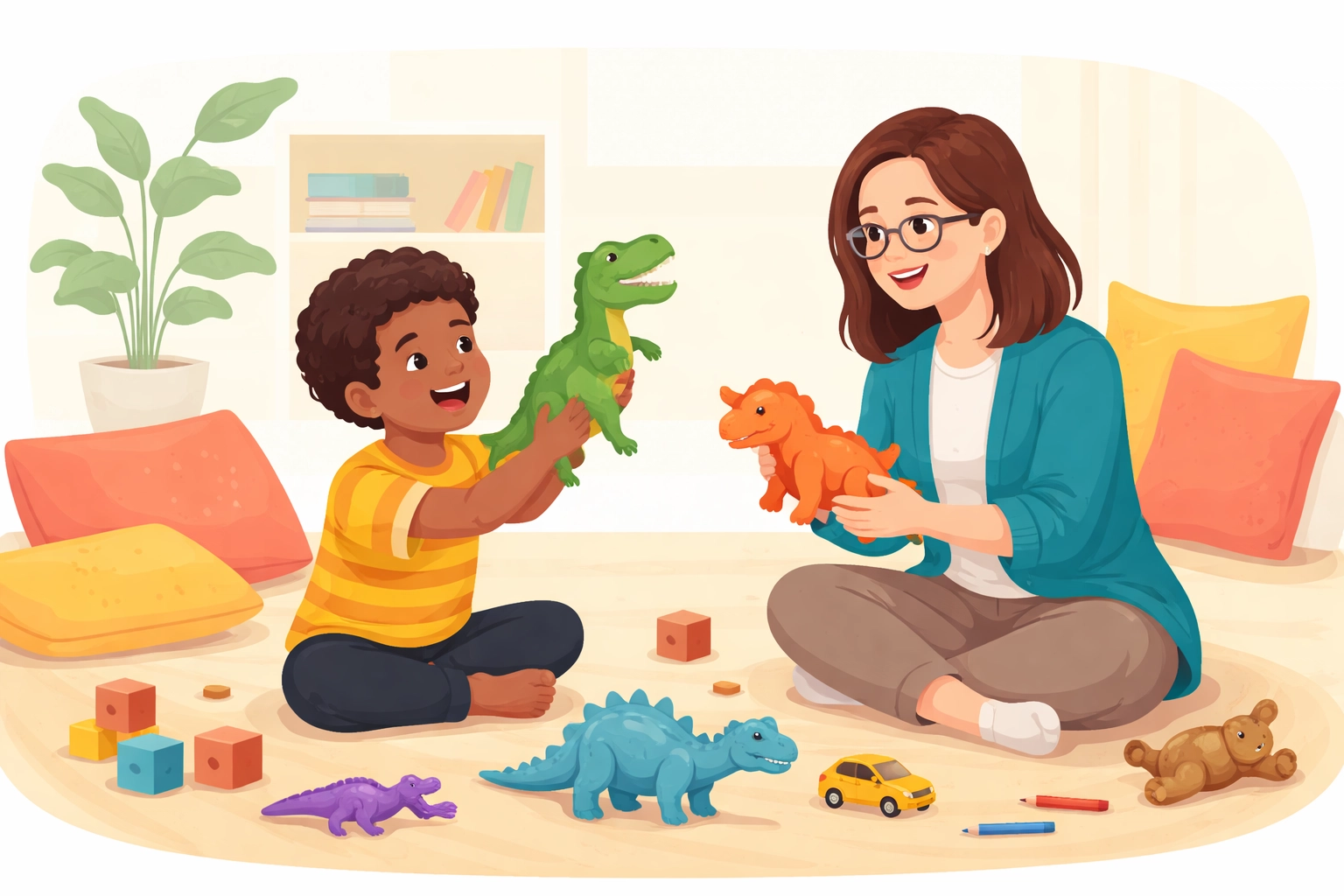
What does that look like in practice? Instead of rigid compliance-based training, we follow your child's lead. If your kiddo is obsessed with dinosaurs, guess what? Dinosaurs become part of the session. We meet children where they are, tap into their interests, and use positive reinforcement to encourage growth: never punishment or coercion.
This matters because therapy should feel safe. When children enjoy their sessions and trust their therapists, they're more engaged, more willing to try new things, and more likely to make meaningful progress.
3. Building a Trusting Relationship Comes First
Speaking of trust: let's talk about why it's non-negotiable.
Before any skill-building can happen, your child needs to feel comfortable with their therapist. That's why the early stages of in-home ABA often focus heavily on rapport-building. Your child's therapist will spend time getting to know them, learning what they love, what makes them laugh, and what helps them feel secure.
This isn't wasted time. It's the foundation everything else is built on.
When your child sees their therapist as a trusted person: someone who's fun to be around, who listens, who respects their boundaries: they're far more open to learning. And honestly? Therapy just works better when it's rooted in genuine relationship rather than forced compliance.
4. You're Part of the Team (And Your Input Matters)
In-home ABA therapy isn't something that happens to your family: it's something that happens with you.
As a caregiver, you'll be involved from the very beginning. A Board Certified Behavior Analyst (BCBA) will conduct an initial assessment to understand your child's strengths, challenges, and goals. But here's the thing: your perspective is essential to that process. You know your child better than anyone, and your observations help shape a treatment plan that actually fits your family's life.
Throughout therapy, you'll also receive caregiver training. This isn't about turning you into a therapist: it's about giving you practical tools and strategies you can use every day. When you understand why certain approaches work and how to support your child's progress between sessions, the impact of therapy multiplies.
Plus, when everyone in the household is on the same page, your child experiences more consistency: and consistency is huge for learning.
5. Therapy Goals Are Individualized (There's No Cookie-Cutter Approach)
Every child is different, which means every treatment plan should be different too.
Your child's BCBA will work with you to identify specific goals based on what your child needs to thrive. For some kids, that might mean focusing on communication skills or learning to express needs without frustration. For others, it could be building independence with self-care tasks like dressing or brushing teeth. Social skills, emotional regulation, play skills, safety awareness: the possibilities are wide-ranging.
The key is that goals are tailored to your child's current abilities and designed to grow with them over time. Progress is tracked through ongoing data collection, and the BCBA continuously reviews that data to make sure the plan is working. If something isn't clicking, adjustments are made. Therapy should never feel stagnant.

6. In-Home Therapy Works Especially Well for Certain Kids
While ABA can be delivered in clinics, schools, or homes, in-home therapy tends to be a particularly good fit for:
- Children who feel anxious in unfamiliar settings. If your child struggles with transitions or new environments, learning at home removes that barrier entirely.
- Younger children (often between 18 months and early elementary age) who benefit from the comfort and familiarity of home.
- Kids who need support with daily living skills that are best practiced in their actual living space.
- Families who want to be closely involved in therapy and prefer having sessions happen where they can naturally observe and participate.
That said, the "right" setting depends on your child's unique needs and goals. A good provider will help you figure out what makes the most sense: whether that's fully in-home, a combination of settings, or something else entirely.
7. Insurance Coverage and Getting Started Is More Accessible Than You Might Think
If you're worried about the logistics, here's some reassuring news: most major insurance providers in Texas cover ABA therapy. Many families are able to access services with little to no out-of-pocket cost, though coverage details vary by plan.
When you reach out to a provider like Pillars Behavioral Health, the team can help you navigate insurance verification and understand what's covered. You shouldn't have to figure that part out alone.
The typical process looks something like this:
- Initial contact and insurance verification – You reach out, share some basic information, and the provider checks your benefits.
- Assessment – A BCBA meets with your family (often in your home) to evaluate your child and discuss goals.
- Treatment plan development – Based on the assessment, a personalized plan is created.
- Therapy begins – Regular sessions start, with ongoing progress monitoring and caregiver involvement.
It's also worth noting that if your family primarily speaks Spanish, our Spanish program ensures you can access support in the language most comfortable for you.

Finding the Right Fit for Your Family
Choosing ABA therapy: and choosing a provider: is a big decision. You want to feel confident that your child will be treated with respect, that their individuality will be honored, and that therapy will actually make a positive difference in your daily lives.
At Pillars Behavioral Health, we believe therapy should be compassionate, play-based, and centered on building genuine connections. We follow your child's lead, celebrate their strengths, and work alongside your family every step of the way.
If you're exploring in-home ABA therapy in Texas and want to learn more about whether it's the right fit, we'd love to talk. No pressure, no sales pitch: just a conversation about your child and how we might be able to help.
Leave a Reply