
Starting in-home ABA therapy can feel both exciting and overwhelming. You're taking a huge step toward supporting your child's growth, but you might wonder how to make the most of this opportunity. The good news? When families actively participate in the process, children make remarkable progress in their own familiar environment.
In-home ABA therapy offers unique advantages that clinic-based services simply can't match. Your child learns new skills in the same place where they'll actually use them: at the dinner table, in their bedroom, during family movie night. This natural setting helps skills stick and transfer to real-life situations more easily.
Here are five essential steps to help your family thrive during your ABA therapy journey.
Step 1: Create the Right Environment and Structure
Your home becomes both classroom and sanctuary when you start ABA therapy. The key is finding that sweet spot where learning can happen without disrupting your family's natural rhythm.
Choose a dedicated therapy space that works for your family's needs. This doesn't mean you need to transform your living room into a clinical setting. Instead, pick an area with minimal distractions where your child can focus: maybe a corner of the playroom or a spot at the kitchen table. Keep this space organized with easy access to materials your therapist uses regularly.
Establish consistent daily routines that support your child's learning. Children thrive on predictability, and when therapy sessions happen within familiar routines, your child feels more secure and ready to engage. Consider using visual schedules that show what comes next: snack time, therapy, then outdoor play. These visual cues help your child anticipate transitions and reduce anxiety.

Think about the practical details too. Ensure a responsible adult is always home during sessions, and try to minimize household disruptions during therapy time. This might mean scheduling sessions when siblings are at school or asking family members to use headphones while watching TV.
Step 2: Learn ABA Techniques and Partner with Your Team
Your child's ABA team isn't just there to work with your child: they're there to empower you as a parent. The most successful families dive into learning alongside their children.
Ask for regular parent training sessions with your Board Certified Behavior Analyst (BCBA). These aren't just nice-to-have meetings; they're essential for your family's success. During these sessions, you'll learn the specific techniques your child's team uses and understand the reasoning behind each strategy.
Don't be shy about asking questions. If you don't understand why your therapist is using a particular approach or if something isn't working at home, speak up. Your insights about your child's preferences, triggers, and motivations are invaluable to the team.
Practice open communication with your behavior technicians too. They spend significant time with your child and often notice patterns or breakthroughs that can inform your home strategies. Share what you observe during non-therapy hours: these details help create a complete picture of your child's progress.
Remember, you know your child better than anyone. Your therapist brings professional expertise, but you bring intimate knowledge of your child's personality, history, and family dynamics. This partnership creates the strongest foundation for success.
Step 3: Master Positive Reinforcement and Skill Building
At the heart of ABA therapy lies a simple but powerful principle: children learn best when their efforts are recognized and rewarded. But effective reinforcement goes beyond just saying "good job."
Discover what truly motivates your child. Every child is unique: some light up for favorite snacks, others crave extra playtime, and some just want enthusiastic praise. Pay attention to what makes your child's eyes sparkle with excitement. These discoveries become your most powerful tools for encouraging new skills.
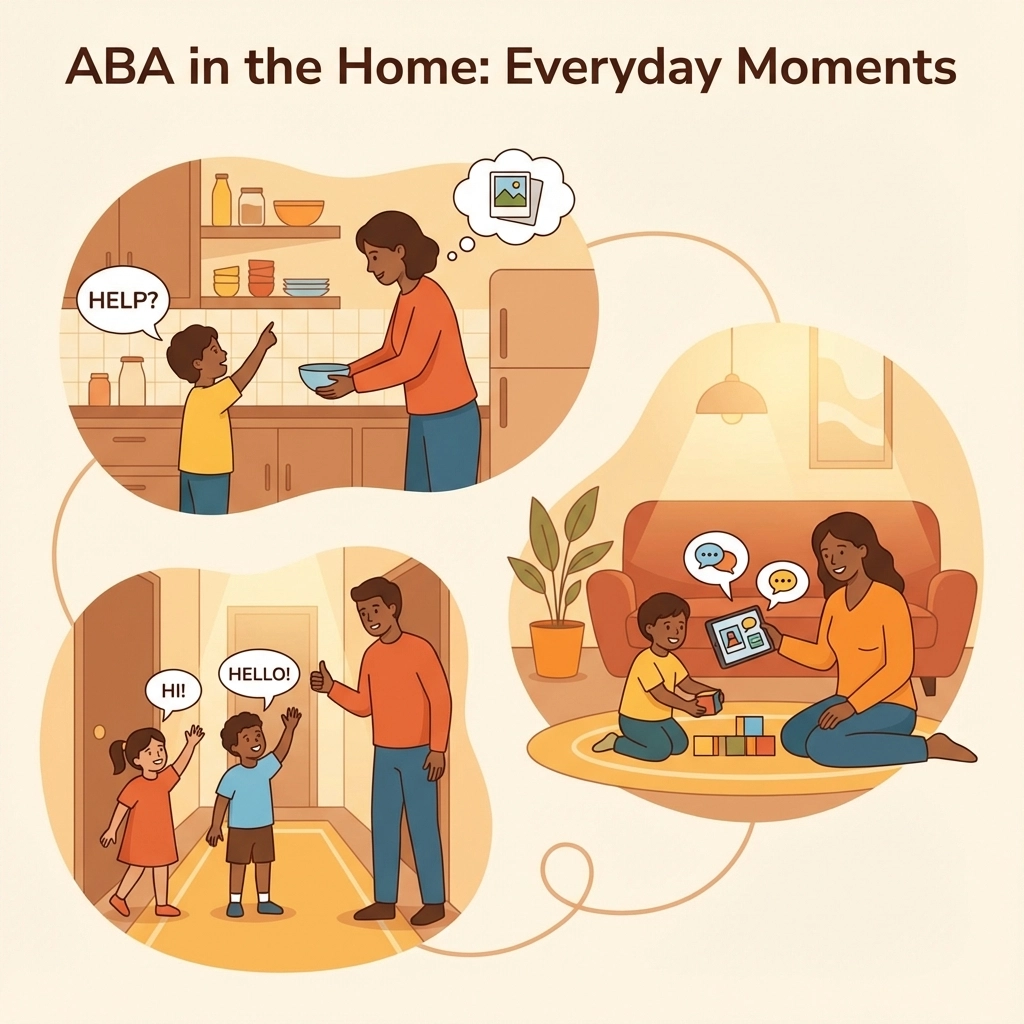
Timing matters with reinforcement. The most effective praise or rewards happen immediately after your child demonstrates the desired behavior. If your child successfully asks for help using words instead of crying, acknowledge that achievement right away. This immediate connection helps your child understand exactly what they did well.

Break big skills into smaller, manageable steps. Learning to tie shoes involves dozens of smaller movements. Learning to ask for help includes making eye contact, finding the right words, and using an appropriate tone. When you celebrate each small step, your child builds confidence and momentum toward the bigger goal.
Use visual aids when they help. Some children learn better when they can see what's expected. Picture schedules, visual reminders, or even simple hand gestures can support your child's understanding and success.
Step 4: Practice Consistently and Track Progress
Consistency transforms occasional success into lasting change. The skills your child practices during formal therapy sessions need reinforcement throughout your daily routine.
Look for natural opportunities to practice skills during everyday activities. If your child is working on requesting items, encourage them to ask for their favorite cup at breakfast or request their preferred book at bedtime. These real-world practice sessions help skills become second nature.
Try Discrete Trial Training (DTT) techniques when appropriate. This structured approach involves giving clear instructions, providing prompts if needed, and offering immediate reinforcement. It might sound formal, but DTT can happen anywhere: while folding laundry together or during car rides.
Keep simple data on your child's progress. You don't need complicated charts or forms. Maybe it's just noting on your calendar when your child successfully used their communication skills or tried a new food without prompting. This information helps your BCBA adjust goals and strategies to match your child's evolving needs.
Celebrate the wins, both big and small. Progress isn't always linear, and some days will feel more challenging than others. When your child masters a skill they've been working on for weeks, or when they surprise you by using a new strategy independently, take a moment to acknowledge their growth.
Step 5: Involve Your Whole Family and Stay Patient
ABA therapy works best when it becomes a family affair, not just something that happens during scheduled sessions. Your extended support network can multiply your child's opportunities for practice and success.
Help siblings, grandparents, and close family friends understand your child's goals and strategies. When everyone uses similar approaches, your child experiences consistency across all their relationships. Teach family members simple techniques they can use during their interactions with your child.
Create opportunities for your child to practice skills with different family members. If your child is working on social greetings, they can practice with visiting relatives. If they're learning to make requests, siblings can become practice partners during playtime.
Maintain realistic expectations and celebrate your family's unique journey. Every child progresses at their own pace, and comparison to other families can steal your joy and confidence. Some skills might develop quickly while others take months to solidify. This doesn't reflect your child's potential or your effectiveness as a parent.
Build in self-care for yourself and your family. Supporting a child through ABA therapy requires emotional and physical energy. Make sure you're taking care of your own needs too, whether that's connecting with other parents, pursuing your own interests, or simply taking breaks when you need them.
Moving Forward Together
In-home ABA therapy offers your family a unique opportunity to grow together while supporting your child's development. By creating a supportive environment, learning alongside your child, using effective reinforcement, practicing consistently, and involving your whole family, you're setting the stage for meaningful, lasting progress.
Remember that this journey looks different for every family. Trust your instincts, communicate openly with your team, and celebrate the unique strengths and progress your child brings to each day. At Pillars Behavioral Health, we're here to support your family every step of the way, providing the guidance and partnership you need to help your child thrive in their own home environment.
Your commitment to your child's growth, combined with professional support and evidence-based strategies, creates a powerful foundation for success. Take it one day at a time, and remember that every small step forward is worth celebrating.
Leave a Reply